The information provided on this site is for educational and informational purposes only and does not constitute medical advice, diagnosis, or treatment. It is not a substitute for professional medical advice. Always seek the advice of your physician or other qualified health provider with any questions you may have regarding a medical condition. Never disregard professional medical advice or delay seeking it because of information provided here.
Research shows that regular mindfulness practice creates measurable changes in brain structure and function.
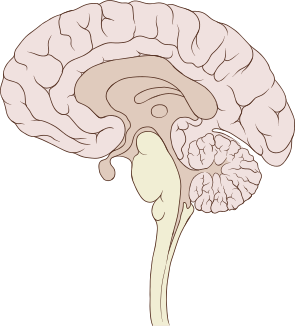
Hover over a brain region to explore how meditation changes it.
Recent discoveries have shown that the brain reorganizes its structure and connections in response to stimulus. This is called neuroplasticity. Through directing our attention and managing our awareness, mindfulness can help shape the brain, creating stronger or new neural pathways.
Not only does mindfulness help sculpt the brain, it leads to an open spaciousness where the heart can flourish. Mindfulness practices like loving-kindness, body awareness, gratitude exercises, and visualization all help develop open heartedness, strengthening wholesome emotions and weakening the power of emotions that threaten our well-being.
Compassion
Strengthens empathy toward self and others
Gratitude
Amplifies appreciation for small experiences
Calmness/Serenity
Promotes peace and emotional stability
Equanimity
Maintains balance during challenges
Resilience
Improves recovery from negative emotions
Self-Awareness
Better recognition of emotional states
Anxiety & Fear
Decreases anxious responses
Anger
Fosters calmer responses
Sadness/Rumination
Reduces self-referential negative thinking
In the midst of daily life, there are countless opportunities to pause, breathe, and reconnect. Each moment offers a chance to train the mind and open the heart!
Certain things can't be hurried but they do unfold in their time
See things as if for the first time, with openness, wonder and curiosity
Actively, not passively, recognising that things are the way they are.
Not seeking a special state or forcing an outcome. Just being fully 'with' the process, and accepting it.
Allow all experiences to pass, good, bad or neutral.. Not clinging, grasping, avoiding, or giving up.
Become aware of how we judge ourselves, others, thoughts and situations. And impartially witness.
Intentionally feeling and expressing gratitude daily, to proactively nourish our health and wellbeing.
Develop a basic trust in your feelings, intuition and capacity to heal.
Waking Waves
Our Facilities
370 East Tabernacle, St. George, Utah

A mindfulness center is under construction at 370 East Tabernacle.